Corn silage vs. hay vs. cut-and-carry grass: what works best in the dry season
Published: 02 sept 2026 · Agrícola LG Calderón
A practical comparison of the three most common feeds in Costa Rica when pasture runs short: energy, moisture, handling, cost and which animals each one suits.
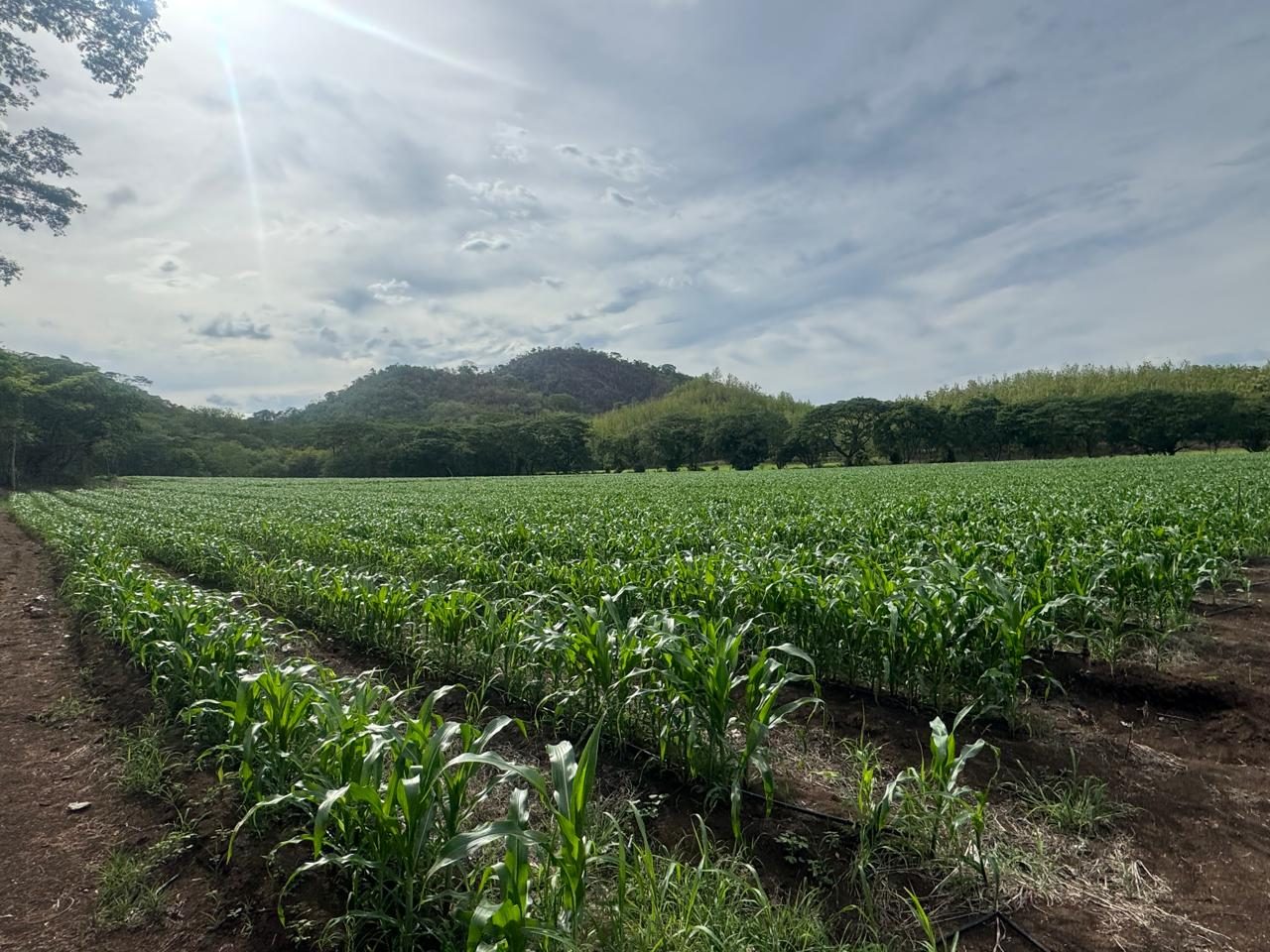
Short answer: in the dry season, corn silage offers the most energy per kilo and is the most reliable way to keep production and body condition; hay mainly provides fiber and is easy to store; cut-and-carry grass is the cheapest if you grow it, but it depends on water and daily labor. The best diet usually combines them.
Quick comparison
| Criterion | Corn silage | Hay | Cut-and-carry grass |
|---|---|---|---|
| Energy | High (grain + plant) | Medium-low | Medium |
| Fiber | Medium | High | Medium-high |
| Moisture | 65–70 % (fresh, juicy) | 10–15 % (dry) | 75–85 % |
| Palatability | Very high | Medium | High |
| Storage | Sealed bags; use within 1–2 days after opening | Months, under roof and dry | Cut and feed the same day |
| Labor | Low (ready to feed) | Low | High (daily cutting) |
| Best for | Milking cows, fattening, dry season | Maintenance, fiber supplement | Farms with irrigation and staff |
When to choose each one
- Corn silage: when you need to sustain milk or weight gain in the dry months, or when you have no irrigation or staff to cut grass daily. It arrives ready for the trough.
- Hay: as a fiber source alongside silage (it helps rumination) and as a long-term reserve. On its own it is not enough for producing cows.
- Cut-and-carry grass (king grass, maralfalfa, sugarcane): if you have irrigation and people to cut it; quality drops sharply past the ideal cutting point.
A combination that works
For an adult cow in the dry season, a practical base is corn silage as the main feed, 1–3 kg of hay for fiber and, for high producers, concentrate or molasses as advised by a technician. See How much silage does a cow eat per day? to calculate amounts.
Cost: how to compare properly
Do not compare price per kilo "as is": compare price per kilo of dry matter and energy supplied. A kilo of hay has more dry matter than a kilo of silage but far less energy, which is why silage is usually more cost-effective when the goal is production. Our silage sells at CRC 100 per kg in 35 kg bags; we are happy to help you run the comparison with prices in your area.
The figures in this guide are general management references; for a precise ration consult your veterinarian or animal nutritionist.
Frequently asked questions
Which is better for dairy cows in the dry season, silage or hay?
Corn silage, because it provides far more energy per kilo and sustains milk production. Hay works as a fiber supplement, not as the base of the diet.
Can silage and hay be fed together?
Yes, and it is recommended: silage as the main feed plus 1–3 kg of hay per day for fiber and good rumination.
Does corn silage replace pasture?
In the dry season it can be the base of the diet when pasture is scarce. In the rainy season it works best as a grazing supplement.
How do I compare the cost of silage with hay?
Compare price per kilo of dry matter and the energy each one supplies, not just price per fresh kilo. Silage is usually more cost-effective when production is the goal.